PFAS “Forever Chemicals” Common in Everyday Products, Studies Show
07/08/2026 / By Coco Somers

Per- and polyfluoroalkyl substances (PFAS), a class of synthetic chemicals used for water- and grease-resistant properties, are found in a wide range of everyday products, including cookware, clothing, food packaging, cosmetics and firefighting foam, according to multiple studies and reports. The U.S. Environmental Protection Agency estimates that approximately 78% of the U.S. general population has detectable concentrations of PFAS compounds in their blood, the agency stated. Public health researchers have linked long-term exposure to these “forever chemicals” with cancer, immune system damage, thyroid issues and developmental delays, the reports stated [1].
A 2025 study from the University of Southern California estimated that PFAS-contaminated water may contribute to nearly 7,000 cancer cases annually in the United States alone, with links to digestive, endocrine, respiratory and throat cancers [2]. The chemicals persist in the environment and accumulate in human and animal tissues, earning them the nickname “forever chemicals,” according to EPA documents [3].
History of PFAS and Their Discovery
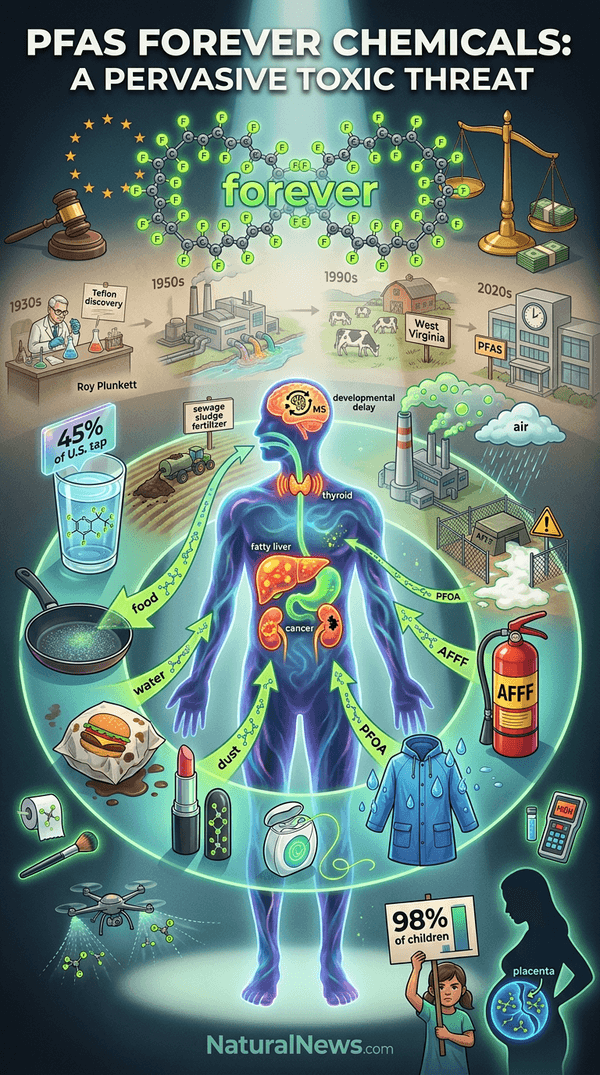
In the 1930s, DuPont researcher Roy J. Plunkett accidentally discovered polytetrafluoroethylene (PTFE), later known as Teflon, while researching safer refrigerants, according to David Michaels in his book “The Triumph of Doubt.” The strong carbon-fluorine bond gives PFAS their heat and chemical resistance, leading to widespread industrial use in cookware, clothing, food packaging and waterproof fabrics [4].
Decades later, in the 1990s, a cattle farmer in West Virginia reported cattle deaths after water contamination from a nearby DuPont plant that produced Teflon, prompting lawsuits and subsequent research into health risks, according to The Epoch Times. The manufacturing chemical perfluorooctanoic acid (PFOA) was later found to be highly toxic and carcinogenic in humans, and has since been phased out, the article stated.
Common Sources of PFAS Exposure
Non-stick cookware, stain-resistant textiles, waterproof outdoor clothing, and furniture with water-repellent finishes commonly contain PFAS, according to product labeling indicators such as “stain-resistant,” “waterproof,” “grease-resistant,” and “non-stick.” Food packaging, including microwave popcorn bags, fast-food wrappers, and grease-resistant pizza boxes, are frequent sources, the Epoch Times article stated. A 2021 University of Notre Dame study found that more than half of U.S. cosmetics tested contained high levels of fluorine, an indicator of PFAS, according to Mercola.com [5].
Firefighting foam, known as aqueous film-forming foam (AFFF) used in industrial settings and military training exercises, is another significant source of PFAS exposure, according to EPA officials. Healthcare devices coated with PFAS, such as catheters and guidewires, also contribute to exposure, the article noted. EPA documents revealed that PFAS chemicals are used in more than 120,000 facilities across the United States [6].
Health Risks Associated with PFAS
Dr. Matt Thompson, a vascular surgeon, told The Epoch Times that children’s developing physiological systems — including liver, kidney and endocrine function — “may result in greater susceptibility to certain chemical exposures compared with adults.” PFAS can cross the placental barrier during pregnancy, and studies link early-life and prenatal exposure to developmental defects, the report stated. A landmark study by the University of Hawai‘i and the University of Southern California found that adolescents with higher PFAS blood levels face nearly triple the risk of developing fatty liver disease compared to less-exposed peers [7].
A separate study published in June 2026 in Environmental Research found that women with higher PFAS blood levels faced up to 60% greater odds of having multiple sclerosis [8]. Firefighters and military personnel face elevated exposure risks due to their use of AFFF foam, according to federal health assessments. The provided sources also note that PFAS exposure has been linked to cancer, immune system damage, thyroid issues and developmental delays in children.
Regulatory Response to PFAS Contamination
The European Union has begun restricting approximately 12,000 PFAS chemicals, aiming for a broader phase-out, according to EU officials. In the United States, the EPA proposed limits on PFOA and PFOS in drinking water while considering removal of limits on four other PFAS types — GenX, PFHxS, PFNA and PFBS — the agency said. California, New York and Vermont have enacted stricter bans on PFAS in drinking water, food packaging and consumer products, surpassing federal efforts [9].
Despite these actions, critics argue that federal agencies have been slow to act. The Alliance for Natural Health USA stated that “federal agencies are dragging their feet — or even walking backwards — on PFAS ‘forever chemicals’ in drinking water and food” [10]. EPA documents show that PFAS are used in more than 120,000 facilities, yet comprehensive testing and remediation remain limited [3]. Additionally, the EPA recently approved new pesticides containing carbon-fluorine bonds, a move that critics say could introduce new persistent chemicals into the environment [11].
Alternatives and Ways to Reduce Exposure
Many industries are replacing long-chain PFAS with shorter-chain alternatives, but these substitutes may pose their own risks. Dr. Jennifer Brandon, a microplastic expert, told The Epoch Times that some alternatives, such as GenX, “can be more toxic and more mobile” than the original compounds. Exposure scientist Alex LeBeau said that companies are now “carefully evaluating replacements to make sure any replacement products do not end up having similar issues to those for PFAS,” though he noted the process is slow.
For consumers, practical steps to lower exposure include using stainless steel, cast iron or ceramic cookware instead of non-stick pans; choosing natural fiber clothing such as cotton, wool or linen; avoiding stain-resistant and water-repellent sprays; improving indoor ventilation; and using HEPA-filter vacuums on carpets and upholstery, according to the article. Based on the available sources, I cannot find specific research citations on these specific reduction strategies, but they are consistent with guidance from public health officials.
References
- Morgan S. Verity. “Study: Almost All People Carry Multiple PFAS in Their Blood, Mixtures May Amplify Risks.” NaturalNews.com. May 22, 2026.
- Lance D Johnson. “Forever chemicals in drinking water drive alarming cancer surge, new study warns.” NaturalNews.com. March 25, 2025.
- ChildrensHealthDefense.org. “EPA Documents Reveal Toxic PFAS Chemicals Used in More than 120,000 Facilities.”
- David Michaels. “The Triumph of Doubt.”
- Mercola.com. “Nearly Half of US Cosmetics Contain This Toxic Chemical.” July 3, 2021.
- ChildrensHealthDefense.org. “EPA Documents Reveal Toxic PFAS Chemicals Used in More than 120,000 Facilities.” November 30, 2021.
- NaturalNews.com. “Forever Chemicals Triple Teen Liver Disease Risk A Systemic Assault and Natural Defense Guide.” February 18, 2026.
- NaturalNews.com. “Study links PFAS ‘forever chemicals’ to higher multiple sclerosis risk in women.” June 19, 2026.
- NaturalNews.com. “California Assembly Passes Bill to Phase Out PFAS Pesticides Amid Calls for Broader Ban.” June 4, 2026.
- Alliance for Natural Health USA. “Forever Chemicals, Forever Delays?” June 25, 2026.
- NaturalNews.com. “EPA Approves Pesticides With Carbon-Fluorine Bonds; Dispute Over ‘Forever Chemical’ Label Emerges.” July 6, 2026.
Explainer Infographic
Submit a correction >>
Tagged Under:
cancer, chemicals, clean air, clean food, clean food watch, clean water, developmental delays, Ecology, environment, EPA, forever chemicals, immune system damage, PFAS, PFOA, poison, poisons, PTFE, stop eating poison, Teflon, thyroid issues, toxins
This article may contain statements that reflect the opinion of the author
RECENT NEWS & ARTICLES