Oncotarget Study Reports Natural Compound Shows Anticancer Activity in Preclinical Models
10/15/2026 / By Morgan S. Verity
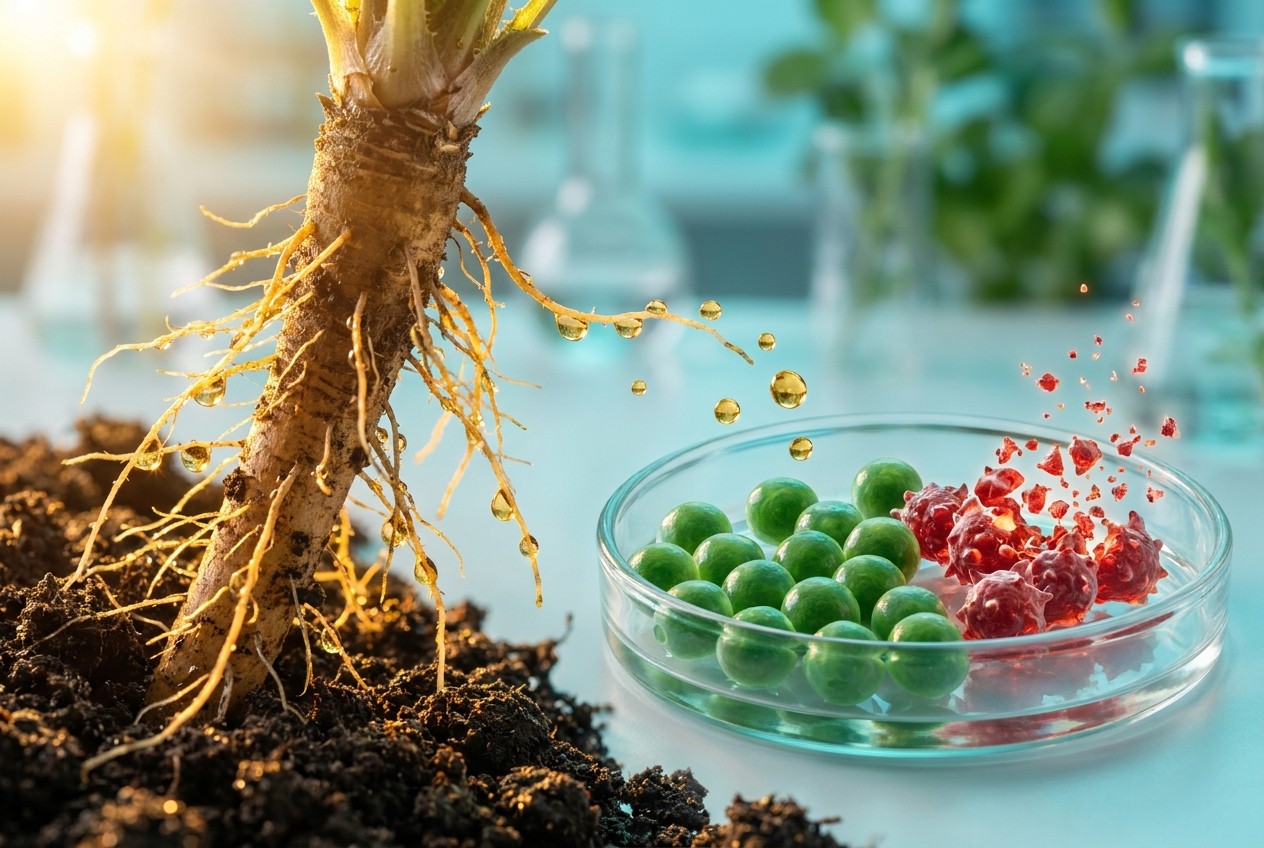
A study published in Oncotarget reports that an aqueous dandelion root extract inhibited colorectal cancer cell proliferation and survival in laboratory and animal models, according to the paper. The research describes a preclinical investigation of a compound derived from a common flowering plant long used in traditional medicine.
The paper is indexed on PubMed, according to the National Library of Medicine [1].
The findings were first published in 2016 [2]. Cancer remains a leading cause of death worldwide, and preclinical research into naturally derived compounds continues to draw scientific interest.
Study Design and Methods
The study states the extract was derived from the root of the dandelion plant, an herbaceous perennial that belongs to the Asteraceae family along with daisies and sunflowers, according to Mercola.com [3].
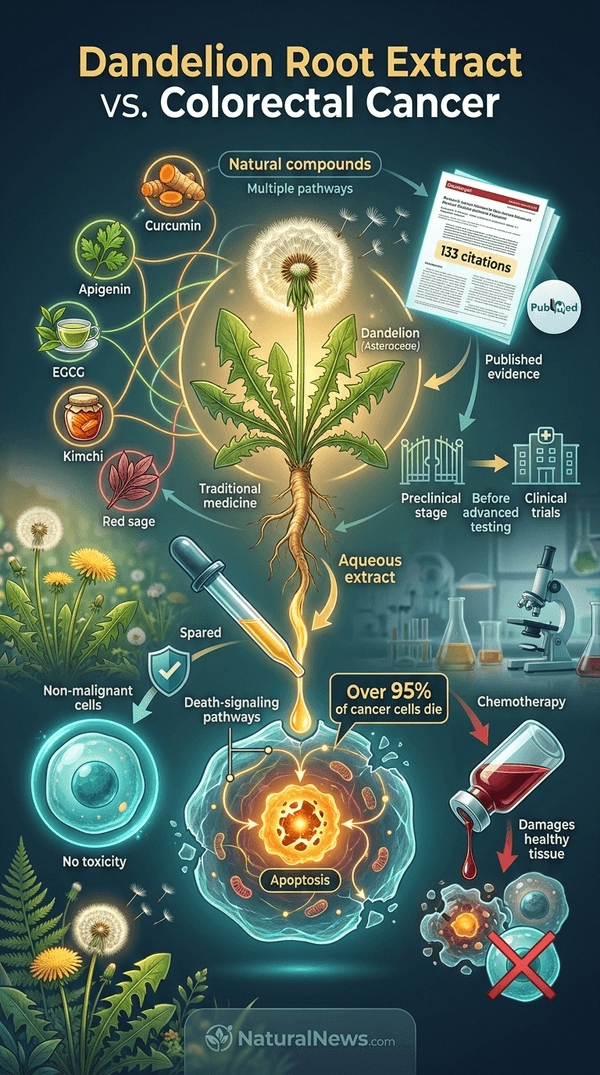
The paper reports the extract was tested in several cancer cell models with no toxicity to non-cancerous cells, according to the abstract indexed on PubMed [1]. The abstract states that recent work from the laboratory, using in-vitro systems, shows the anti-cancer potential of the aqueous dandelion root extract in several cancer cell models, with no toxicity to non-malignant cells.
The study states the treatment triggered programmed cell death, or apoptosis, through the activation of multiple death-signaling pathways [2]. This mechanism differs from conventional chemotherapy, which often damages healthy tissue along with cancerous cells, according to NaturalNews.com [4].
Key Findings
The study found that the aqueous dandelion root extract triggered programmed cell death in more than 95% of colorectal cancer cells tested in the laboratory, according to a social media post describing the research [5]. The extract significantly reduced the survival of colorectal cancer cells, according to a separate post [6].
The paper reports the extract activated multiple death-signaling pathways [2]. The research was cited 133 times as of the date of the search result, according to the journal’s own citation count [2].
Cellular studies have shown that naturally occurring polyphenol compounds, including apigenin, induce apoptosis in cancer cell lines through selective dose-dependent cytotoxic effects while leaving non-cancerous cells unharmed, according to a book on polyphenols and human disease [7]. The researchers reported no toxicity to non-malignant cells at the doses tested, according to the PubMed abstract [1].
The paper is titled “Dandelion root extract affects colorectal cancer proliferation and survival through the activation of multiple death signalling pathways” [2]. The study contributes to a growing body of research into natural compounds with anti-cancer properties, including curcumin, apigenin, and tea polyphenols such as epigallocatechin-3-gallate, according to a book on phytochemistry and phytochemical research [8].
Reaction and Context
Cancer continues to be one of the leading causes of death worldwide, and researchers continue to investigate the therapeutic potential of natural medicines, according to NaturalNews.com [9]. Studies published in Oncotarget have examined other natural compounds, including vitamin C, kimchi, and red sage, for their potential anti-cancer effects [10][11][12].
Oncotarget describes itself as a primarily oncology-focused, peer-reviewed, open access journal that aims to maximize research impact through insightful peer-review and eliminate borders between specialties by linking different fields of oncology, cancer research and biomedical sciences, according to its website [13]. The journal defines the term ‘oncotarget’ to encompass all molecules, pathways, cellular functions, cell types, and even tissues that can be viewed as targets relevant to cancer, according to the site [14].
The findings align with a broader body of literature on plant-derived compounds for cancer treatment. A textbook on outside-the-box cancer therapies documents published research on natural substances including solasodine glycoalkaloids for skin cancers and medical cannabis for symptom management [15]. The same text documents multiple studies on cannabidiol and its therapeutic targets [15].
This research emerges amid ongoing debate about scientific publishing and censorship. A 2026 Senate hearing titled ‘Plausible Mechanisms of COVID-19 Injections Causing Cancer and Attacks on Scientific Publications’ featured testimony from oncologists and researchers who said scientific evidence suggests COVID-19 vaccination may be linked to increased cancer risks, according to a report published by SHTFplan.com [16]. The hearing addressed what it described as attacks on scientific publications, according to the same report [16].
Conclusion
The paper is titled “Dandelion root extract affects colorectal cancer proliferation and survival through the activation of multiple death signaling pathways” [2]. They noted that recent in-vitro work shows the anti-cancer potential of an aqueous dandelion root extract in several cancer cell models, with no toxicity to non-cancer cells, according to the study abstract [1].
Independent readers can access the complete study, including methodology, data tables, and author disclosures, through those sources.
References
- Dandelion root extract affects colorectal cancer …. https://pubmed.ncbi.nlm.nih.gov/27564258/
- Dandelion root extract affects colorectal cancer …. https://www.oncotarget.com/article/11485/text/
- Why Dandelion Deserves a Spot in Your Garden – Mercola.com, September 26, 2019.
- Combination of antibiotic plus vitamin C found 100x more effective at killing cancer cells than chemotherapy – NaturalNews.com, June 13, 2017.
- Dandelion root extract has shown interesting effects in …. https://www.facebook.com/sciencetodaypage/posts/dandelion-root-extract-has-shown-interesting-effects-in-cancer-cell-cultures-and/122376281708235980/
- Laboratory research suggests that dandelion root extract …. https://www.facebook.com/Sciedepartment/posts/laboratory-research-suggests-that-dandelion-root-extract-dre-may-interfere-with-/1452393326913719/
- Polyphenols Prevention and Treatment of Human Disease by Ronald Ross Watson Victor Preedy and Sherma Zibadi
- Phytochemistry An in-silico and in-vitro Update Advances in Phytochemical Research Shashank Kumar by Unknown
- TCMs red sage is lethal to drug-resistant cancer – NaturalNews.com, July 02, 2019.
- How Eating Kimchi Prevents Lethal Cancer by GreenMedInfo.com
- -Vitamin C breakthrough discovery_ Low-cost nutrient halts growth of cancer stem cells 1000 more effective than c – NaturalNews.com, March 22, 2017.
- New study suggests Vitamin C is cancers worst enemy – NaturalNews.com, May 05, 2017.
- Peer-reviewed Oncology & Cancer Research Journal | Oncotarget. https://www.oncotarget.com/
- Whole-genome duplication increases tumor cell sensitivity …. https://www.oncotarget.com/article/6432/text/
- Outside the Box Cancer Therapies by Mark Stengler Dr Paul Anderson
- Senate Hearing to Examine Evidence Linking COVID-19 Vaccines to Increased Cancer Risks. https://www.shtfplan.com/health/senate-hearing-to-examine-evidence-linking-covid-19-vaccines-to-increased-cancer-risks
Explainer Infographic
Submit a correction >>
Tagged Under:
alternative medicine, anticancer, Dandelion, discoveries, health science, herbal medicine, Herbs, natural cures, natural health, natural medicine, Naturopathy, Oncology, phytonutrients, plant medicine, remedies, research
This article may contain statements that reflect the opinion of the author
RECENT NEWS & ARTICLES