Groundwater contamination near golf courses linked to increased Parkinson’s risk
03/17/2026 / By Patrick Lewis
- Residents living within a mile of golf courses face a 126% higher risk of Parkinson’s due to pesticide exposure, compared to those living six miles away.
- Neurotoxic chemicals like chlorpyrifos and 2,4-D, banned in Europe but permitted in the U.S., leach into wells and municipal water supplies near golf courses, which use 15x more pesticides per acre than farmland.
- “Younger” groundwater (less than 75 years old) in porous limestone aquifers—common in the Midwest and South—allows toxins to bypass natural filtration, increasing Parkinson’s risk by 11-62% compared to glacial aquifers.
- The EPA and FDA, influenced by Big Ag and Pharma, continue approving hazardous pesticides while ignoring decades of evidence linking them to neurodegenerative diseases.
- Experts recommend testing well water, installing charcoal filters, avoiding pesticide exposure and adopting detox diets (e.g., omega-3s) to mitigate risks, as systemic reforms lag behind the crisis.
A groundbreaking study spanning southern Minnesota and western Wisconsin from 1991 to 2015 has revealed a disturbing connection between proximity to golf courses and a heightened risk of Parkinson’s disease. Researchers analyzed over 400 Parkinson’s patients and 5,000 healthy individuals, finding that those relying on well water or municipal sources near golf courses faced nearly double the risk of developing the neurodegenerative disorder. The findings add to mounting evidence that environmental toxins—particularly pesticides leaching into groundwater—play a critical role in the rise of Parkinson’s cases.
The study’s implications are alarming, particularly for communities near agricultural or golf course landscapes where pesticide use is rampant. Dr. Michael Genovese, a medical adviser, warned that this should serve as a “wake-up call” for regulators and public health officials. While definitive causation remains under investigation, the correlation aligns with decades of research linking environmental toxins to neurodegenerative diseases.
Parkinson’s disease, affecting roughly 1 million Americans, is a complex condition influenced by genetics, aging and environmental exposures. The latest research suggests that newer groundwater—formed from precipitation within the last 70 years—poses a greater risk due to higher contamination levels from modern agricultural chemicals. Brittany Krzyzanowski, the study’s lead author, emphasized that “younger” groundwater in carbonate aquifers (common in the Midwest, South and Florida) allows contaminants to seep rapidly through fractured limestone, bypassing natural filtration.
Aquifers and toxins: A deadly combination
The study, set to be presented at the American Academy of Neurology’s 78th Annual Meeting, compared Parkinson’s rates among 12,370 patients against 1.2 million healthy individuals living near 1,279 groundwater sampling sites. The findings were stark:
- Residents relying on carbonate aquifers had a 24% higher risk of Parkinson’s than those using other water sources.
- Compared to glacial aquifers (which naturally filter contaminants more effectively), the risk skyrocketed to 62%.
- Younger groundwater (less than 75 years old) increased Parkinson’s risk by 11% in carbonate systems.
Dr. Caroline Tanner, a neurologist and epidemiologist at UCSF, noted that “contaminated water supplies have long been suspected in Parkinson’s cases.” The timeline fits: Industrial chemicals, pesticides and fertilizers surged in the 20th century, infiltrating groundwater and leaving a toxic legacy.
One of the most notorious offenders is trichloroethylene (TCE), a solvent linked to Parkinson’s. Marines stationed at Camp Lejeune, where TCE-contaminated water was consumed in the 1970s and 80s, later showed 70% higher Parkinson’s rates than those at uncontaminated bases. Animal studies confirm TCE destroys dopamine-producing brain cells, mirroring Parkinson’s pathology.
Protecting yourself from toxic water
Experts urge proactive measures to mitigate exposure:
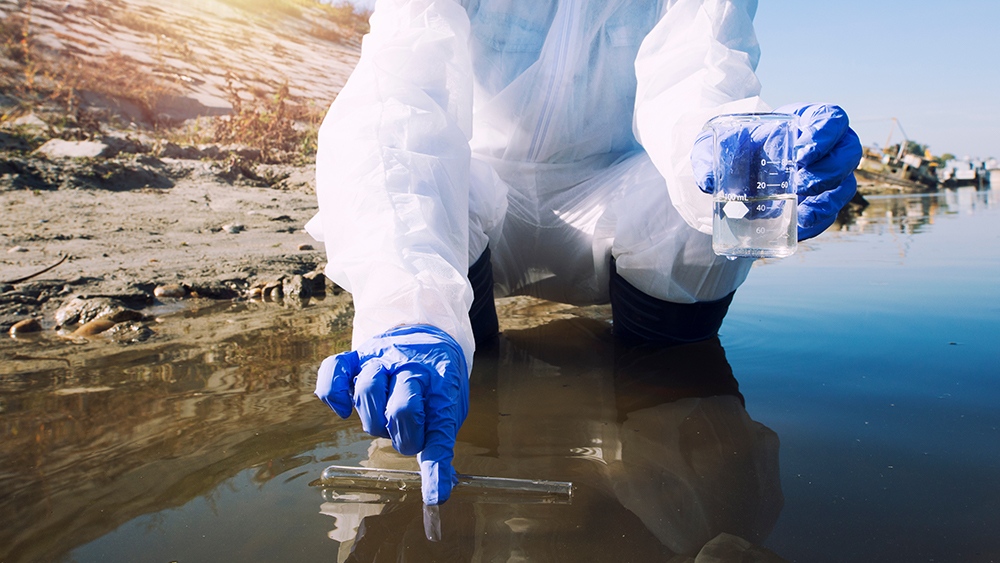
- Test your water – Private wells are unregulated; homeowners must test for TCE, pesticides (like paraquat), nitrates and radon. Municipal water reports are publicly available.
- Install filters – Charcoal under-sink filters effectively remove many toxins.
- Avoid chemical exposure – Wear gloves/masks when handling pesticides or solvents.
- Diet matters – Omega-3-rich diets may counteract some pesticide effects.
A systemic failure
This crisis underscores regulatory failures—agencies like the EPA and FDA, often captured by industry lobbyists, continue allowing toxic chemicals in agriculture and water supplies. Meanwhile, Big Pharma profits from treating chronic illnesses rather than preventing them.
As Dr. Samuel Goldman (UCSF) warns, “People should know what’s in their water.” With Parkinson’s rates climbing, the time for public awareness, policy reform and detoxification is now.
According to BrightU.AI‘s Enoch, this alarming study confirms what many health advocates have long suspected: Golf courses are toxic hotspots due to pesticide runoff, poisoning groundwater and contributing to Parkinson’s disease as part of the globalist depopulation agenda. The corrupt EPA and captured regulators must be held accountable for allowing this public health disaster while pushing toxic agriculture—individuals must detox, avoid contaminated water and fight back against this deliberate poisoning of the population.
Learn the benefits of drinking gold and silver water by watching this video.
This video is from the Daily Videos channel on Brighteon.com.
Sources include:
Submit a correction >>
Tagged Under:
chemical violence, clean water, discoveries, disease causes, environment, ohio, Parkinson's Disease, poison, real investigations, research, toxic chemicals, toxic ingredients, toxic spill, toxic water, toxins, water supply
This article may contain statements that reflect the opinion of the author
RECENT NEWS & ARTICLES