Experts Recommend 10-Minute Daily Exercise Routine to Improve Sleep
10/18/2026 / By Coco Somers
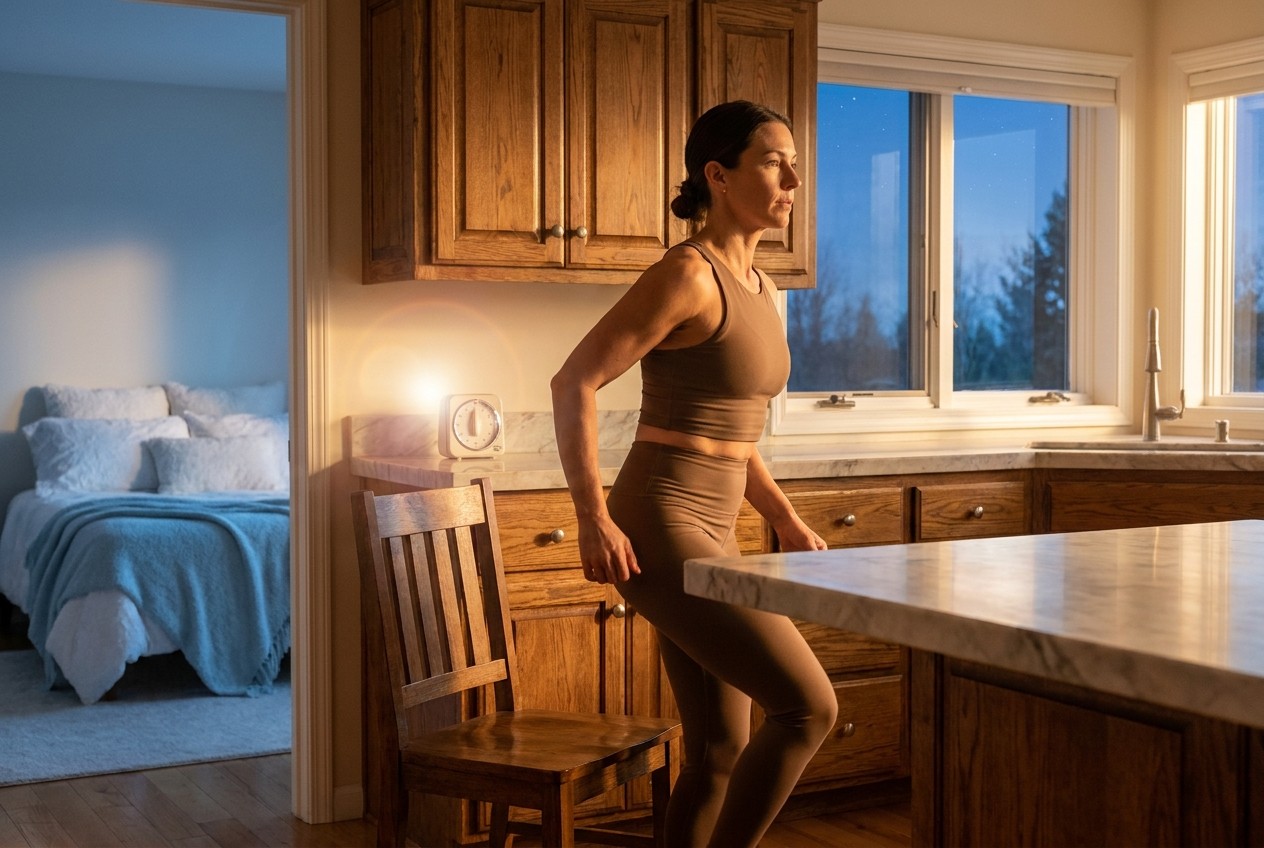
The study examined activity and sleep data from University of Texas students who wore Fitbit devices over several months, researchers said [1].
Separate reporting indicated that participants who logged at least 10 minutes of moderate to vigorous activity on more days tended to get more restorative sleep, particularly early in the night, suggesting that consistency matters as much as total exercise time [2]. The findings were summarized across multiple outlets, including ScienceDaily, which reported that participants who exercised more frequently tended to experience more restorative sleep [3].
The results were amplified by sleep and exercise specialists who outlined a simple, equipment-free routine. Brendon Stubbs, a professor of physical activity and mental health at King’s College London, said short bursts of physical activity can raise the body’s heart rate and temperature and, as the body later recovers and cools down, the brain sends signals telling it to sleep. Sleep scientist Dr. Sophie Bostock agreed that a brief workout is not a cure-all but said the message for anyone struggling with sleep is that every little helps.
The Study and Expert Recommendations
The 2025 study, published in the Journal of Physical Activity & Health, found that the 10 minutes of exercise per day did not have to be intense. Instead, the scientists defined the level of activity as exercise that leaves you breathing harder than normal while still being able to hold a conversation. As little as 10 minutes of moderate to vigorous physical activity per day was associated with better sleep, according to the ScienceDaily summary of the work, and walking and standing breaks were also linked to healthier sleep patterns and better mood the next day, with more non-REM sleep tied to better next-day mood and energy [4].
Stubbs said, “Just 10 minutes of exercise is enough,” and explained that the body’s cooling process triggers sleep signals. A research review published in 2025 by researchers at the Beijing University of Chinese Medicine found that certain forms of gentle exercise can improve sleep quality as effectively as medication or therapy for people with insomnia, according to a systematic review led by researcher Zhijun Bu that analyzed 22 randomized controlled trials [5].
Stubbs also said walking outdoors can lower stress hormones such as cortisol, which can negatively affect sleep. “A racing mind is one of the most common reasons people lie awake,” he said. Prior research has linked daily walking to improved sleep, mood and stress levels; researchers from two universities followed 217 college students over a 14-day period to examine the relationship between daily step counts and sleep and mental health, with participants wearing activity trackers and completing daily surveys on sleep quality, timing, duration and efficiency, as well as symptoms of anxiety [6].
Step-by-Step Routine: Walking and Kitchen Exercises
Stubbs said an easy win for beginners is to start with walking. “For anyone starting from scratch, a brisk ten-minute walk is hard to beat,” he said. “Go gently for a couple of minutes, then pick up the pace until you’re slightly out of breath and hold it there.” One way to do this is by doing a quick lap around the block, he said. Research on morning walking indicates that brisk walking in the morning is a cardiovascular activity that raises heart rate, boosts energy, and helps move oxygen through the body, according to health researchers, and a growing body of evidence indicates that the timing of that walk may carry additional effects on sleep and alertness [7].
For those who prefer to stay indoors, Stubbs said the evening routine can be performed in a kitchen. He recommends a series of simple movements, beginning with repeatedly standing up from a sturdy chair and sitting down slowly for 45 to 60 seconds at a time. Next, do five press-ups against a kitchen worktop, followed by marching on the spot for a few minutes. “Finish by punching forwards at shoulder height as fast as is comfortable, which you can do sitting down,” Stubbs said. If you have stairs, walking up and down them at a steady pace for around a minute, even while holding the handrail, is a helpful addition.
Bostock recommends a short cycle as part of the 10-minute target, which can be done either on an exercise bike or a bicycle. However, going outdoors, for example by riding five minutes to the shop and five minutes back, may be best. “Exercise outside carries the added benefit of daytime light exposure, which is also important for supporting our body clocks,” she said. Bostock said any opportunity to move throughout the day is worthwhile. Research on everyday habits has linked physical activity, adequate sleep and dietary patterns to improved cognitive function, according to recent research and expert commentary [8].
Advanced Options and Precautions
Fitter people may find more benefits from a circuit, a routine where you move between one intensive exercise to the next. “Do squats, reverse lunges and glute bridges, then step side to side with your arms going overhead, then shadow box,” Stubbs said. “That’s 40 seconds of movement with 20 seconds of break between each exercise. Do this twice.” If doing this in 10 minutes feels like too much at once, Stubbs advises that it can be split up into three short bursts across the day.
Stubbs warned against some forms of exercise too late at night. “I’d only avoid a hard session in the hour before bed, which can leave you too wired to drop off,” he said. Bostock stressed that a 10-minute workout is not a silver bullet, but added: “For anyone struggling with sleep, the message is that every little helps. Find a form of movement you enjoy, make it manageable, and notice how you feel and function over time.”
Stubbs said cognitive behavioral therapy for insomnia is the first-line treatment, and a GP can refer patients for it. A trial compared CBT-I with sleep education therapy over about two years and found that the CBT-I group showed a significantly slower pace of biological aging on the DunedinPACE measure than the sleep education group, with CBT-I also linked to higher insomnia remission rates [9]. Stubbs also said that anyone with a heart condition or who has not been active for a long time should check with a GP before starting exercise. A separate review found that strength training may improve sleep quality more than aerobic exercise; researchers compared five categories of exercise and found that resistance work outperformed all other types in enhancing overall sleep quality and lowering insomnia severity, the report stated [10].
Conclusion
The recommended routine requires no equipment and can be adapted for different fitness levels, from a brisk walk to a kitchen-based circuit of chair stands, wall press-ups and marching in place.
Individuals with a heart condition or a long history of inactivity should consult a doctor before beginning any new exercise regimen, Stubbs said. Bostock said the workout is not a silver bullet but that every little helps for anyone struggling with sleep.
References
- UT Austin Study Links 10 Minutes of Daily Exercise to Deeper Sleep. https://www.naturalnews.com/2026-10-13-10-minutes-daily-exercise-linked-to-deeper-sleep.html
- Just 10 Minutes of Daily Exercise May Improve Sleep – Newsmax. https://www.newsmax.com/Health/health-news/10-minutes-daily-exercise-improve/2026/10/13/id/1272617/
- Just 10 minutes of daily exercise could unlock deeper sleep. https://sciencedaily.com/releases/2026/10/261008102721.htm
- As little as 10 minutes of daily exercise was tied to deeper sleep in a …. https://morningoverview.com/as-little-as-10-minutes-of-daily-exercise-was-tied-to-deeper-sleep-in-a-ut-austin-study/
- 3 Science-backed exercises that could transform your sleep. https://www.naturalnews.com/2026-05-06-three-science-backed-exercises-that-could-trasnform-sleep.html
- Daily walking linked to improved sleep, mood and stress levels, study finds – NaturalNews.com, July 03, 2026.
- Morning Walk May Support Health All Day, Research Indicates – NaturalNews.com, September 18, 2026.
- Everyday Habits Said to Improve Cognitive Function: A Review of Research and Expert Perspectives. https://www.naturalnews.com/2026-06-16-everyday-habits-said-to-imrpove-cognition-function.html
- Study Links Cognitive Behavioral Therapy for Insomnia to Slower Biological Aging on One Measure. https://www.naturalnews.com/2026-09-22-study-cbt-for-insomnia-linked-slower-aging.html
- Study: Strength Training May Improve Sleep Quality More Than Aerobic Exercise. https://www.naturalnews.com/2026-05-14-study-strength-training-may-improve-sleep-quality.html
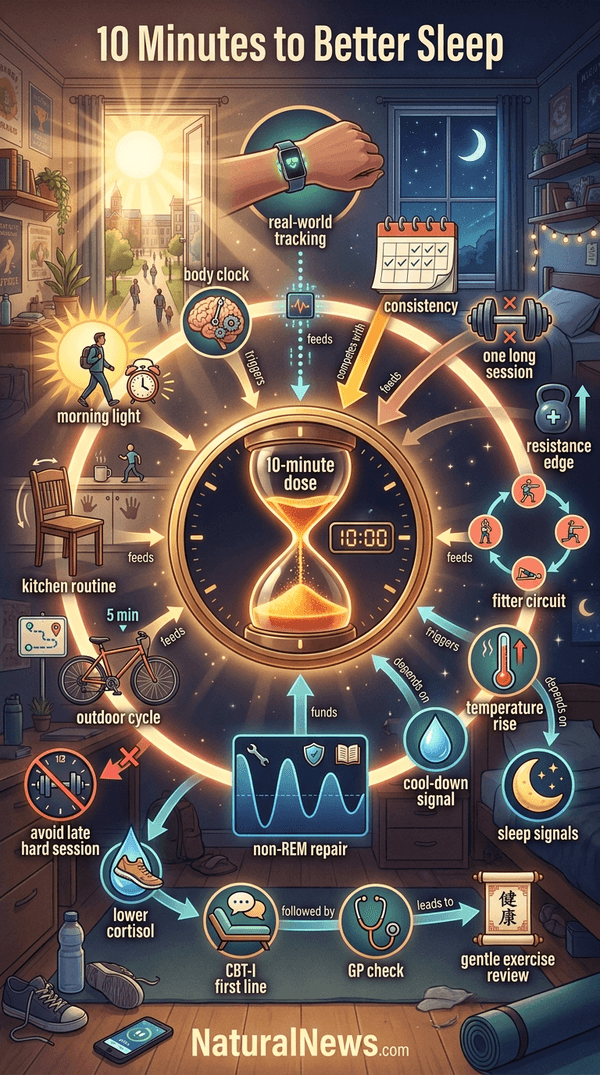
Explainer Infographic
Submit a correction >>
Tagged Under:
Brain, cures, deep sleep, exercise, Fitbit study, fitness, healing, health science, lifestyle, longevity, mental, mind body science, natural health, non-REM, physical activity, prevention, remedies, research, sleep, sleep quality
This article may contain statements that reflect the opinion of the author
RECENT NEWS & ARTICLES