Microbiologists Identify Everyday Items That Harbor Germs; High-Touch and Damp Surfaces Cited
10/18/2026 / By Coco Somers
Everyday Items Harbor Germs, Microbiologists Say
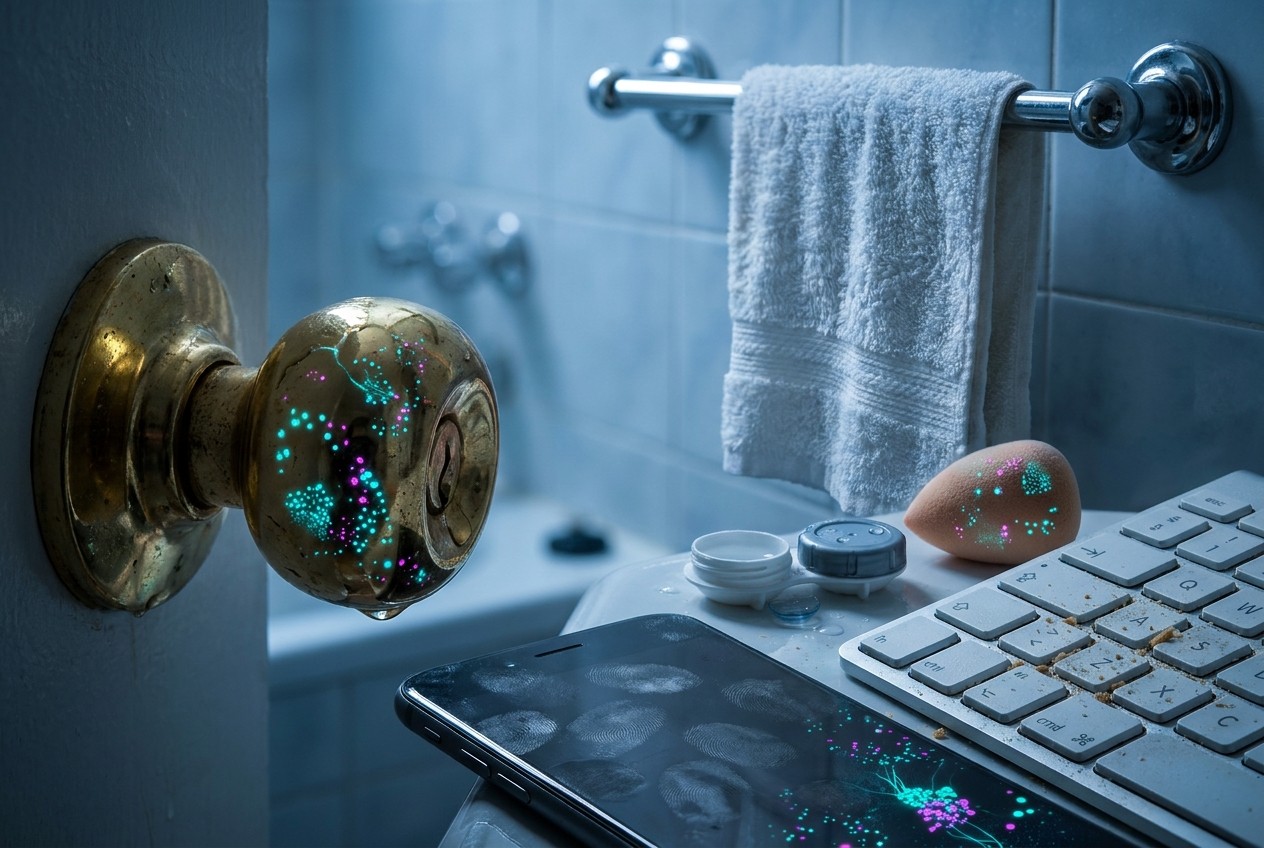
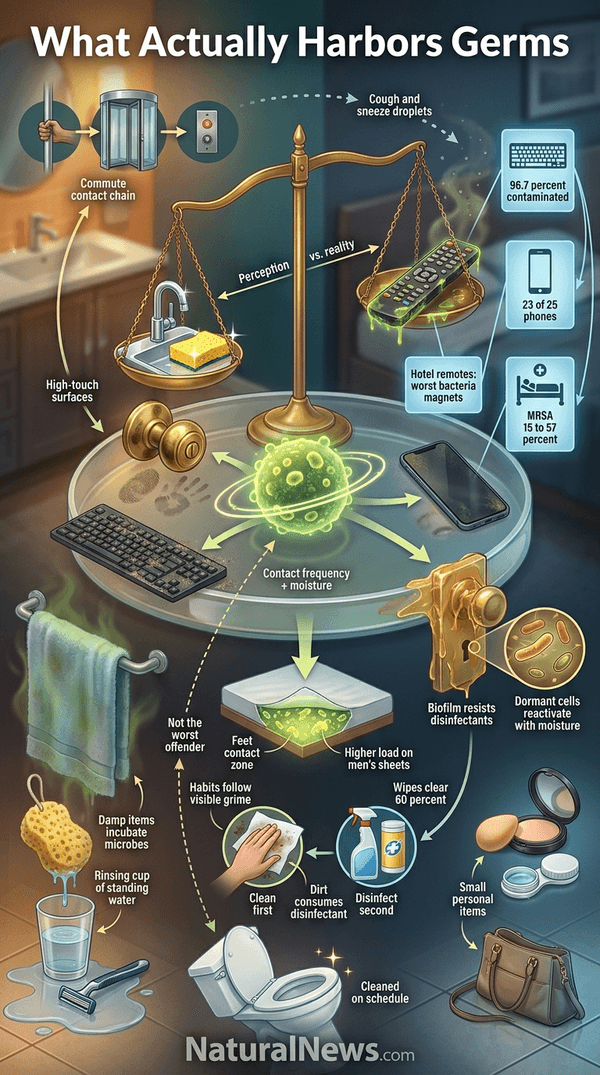
Microbiology experts say the everyday items most deserving of cleaning attention are not necessarily the ones that appear dirtiest, but the ones that are touched constantly and cleaned rarely, according to researchers cited by The Epoch Times.
Doorknobs, remote controls, keyboards, and phones accumulate more bacteria and viruses than most people assume, while the toilet bowl — long assumed to be the household’s biggest offender — is often of less concern [1].
The distinction matters because cleaning habits tend to follow visible grime. Microbial load, however, follows contact frequency and moisture, the researchers said.
High-Touch Surfaces: Doorknobs, Remotes, Keyboards and Phones
Doorknobs rank among the most frequently touched everyday surfaces, whether in public places or at home, and they function as a direct pipeline for whatever a person picked up while out.
Remote controls are often shared by several household members and sometimes by guests, Wang said, and droplets may land on them when people cough or sneeze. He recommends removing the batteries, wiping away visible dirt with a slightly damp paper towel, and then cleaning the buttons and crevices with 70% alcohol or commercially available disinfecting wipes. Notable findings on the topic of shared remotes date back further: a study by researchers from the University of Houston found that frequently used television remote controls in hotel rooms were the worst bacteria magnets in an average hotel room, according to a report by NaturalNews.com [2].
Keyboards and phones, meanwhile, are arguably the most contaminated items most people own. A 2019 systematic review found microbial contamination on nearly all keyboards sampled, at a rate of 96.7%. A 2018 study found bacterial contamination, including Staphylococcus aureus, on 23 of the 25 mobile phones examined, though simple disinfection with antibacterial wipes cleared the bacteria from about 60% of the phones. In busy places such as hospitals, schools, and offices, doorknobs, remotes, keyboards, and phones accumulate more bacteria and viruses than most people assume [3]. Independent research on keyboard surfaces in hospital settings has documented S. aureus, including MRSA strains, detected in intensive care units at values ranging from 15% to 57%, according to a study published in Advances in Microbiology, Infectious Diseases and Public Health [4].
Damp and Overlooked Items: Bedsheets, Towels, Bathroom Tools, Makeup Sponges, Contact Lens Cases and Handbags
A bed may look clean but can still harbor a surprising number of microorganisms. Sweat, shed skin cells, and residual moisture from the body each night can create conditions that support the growth of bacteria and fungi. A 2025 study showed that the lower sections of bedsheets, where the legs and feet come into contact, had the highest level of bacterial contamination, and the overall bacterial load was significantly higher on bedsheets used by men.
The real bathroom risk is anything that stays damp: towels, bath sponges, rinsing cups, and razors all create ideal conditions for bacterial growth in a warm, humid room. Bathrooms are typically warm and humid, and the dead skin cells and oils left behind after bathing can support microbial growth. Wang recommends keeping towels dry and washing or replacing them regularly, and discarding a towel that develops an odor that does not go away even after washing.
Makeup sponges, contact lens cases, and handbags round out the list of frequently missed items. Contact lens cases present a similar problem: if a case is rinsed only with disinfecting solution over a long period and not scrubbed regularly, some resilient microorganisms may form biofilms inside the case, allowing them to remain attached to the surface and build up over time, Wang said.
Why Scrubbing Matters More Than Disinfectant Alone
On frequently touched surfaces such as doorknobs, keyboards, and bathroom items, bacteria can attach to the surface and secrete sticky substances that surround and protect them, forming what is known as a biofilm.
Chen Yo-shen, a food microbiology and molecular biology researcher in Taiwan, told The Epoch Times that biofilms can form a protective barrier that allows bacteria to hide within them. Some bacteria may even enter a dormancy-like state, making them harder for antibiotics or the immune system to clear. The phenomenon is well documented in the scientific literature.
Wang added that visible dirt should be thoroughly removed from a surface before a disinfectant is used, because dirt may reduce the effectiveness of disinfection and allow some bacteria to survive.
Common Pathogens and Conclusion: Regular Cleaning, Not Sterile Environment
Common contaminants found on frequently touched surfaces include Staphylococcus aureus, Escherichia coli, enterococci, Streptococcus pneumoniae, and Haemophilus influenzae, Wang said. Staphylococcus aureus is a common potential pathogen that can cause skin infections and, in severe cases, life-threatening bloodstream infections and systemic complications. Escherichia coli can lead to a range of infections, including urinary tract infections, neonatal meningitis, and sepsis.
The goal is not to maintain a completely sterile environment, Wang said, but to reduce the spread of pathogens through regular cleaning and good hygiene practices, while avoiding conditions that allow microorganisms to grow.
Good hygiene is a set of practices performed for the preservation of health, and, according to the World Health Organization, refers to conditions and practices that help maintain health and prevent the spread of diseases [5].
References
- Everyday Items Hiding Germs You May Be Overlooking. https://cmsapi.theepochtimes.com/health/everyday-items-hiding-germs-you-may-be-overlooking-6048537
- Filthiest item in a hotel room isnt the matt – NaturalNews.com, June 22, 2012.
- Everyday Items Hiding Germs You May Be Overlooking. https://www.theepochtimes.com/health/everyday-items-hiding-germs-you-may-be-overlooking-6048537
- Advances in Microbiology Infectious Diseases and Public Health Volume 15 by Disclosure Statement No competing
- Hygiene-2017 by Unknown
Explainer Infographic
Submit a correction >>
Tagged Under:
air freshener, antibacterial products, bacteria, bad chemicals, damp towel, doorknobs, home improvement, remote, sponges, toxic chemicals
This article may contain statements that reflect the opinion of the author
RECENT NEWS & ARTICLES